


Updated on October 6, 2026
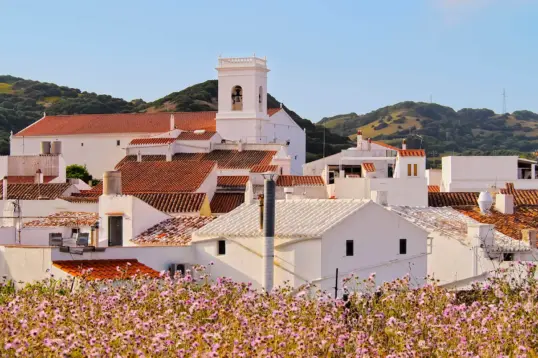
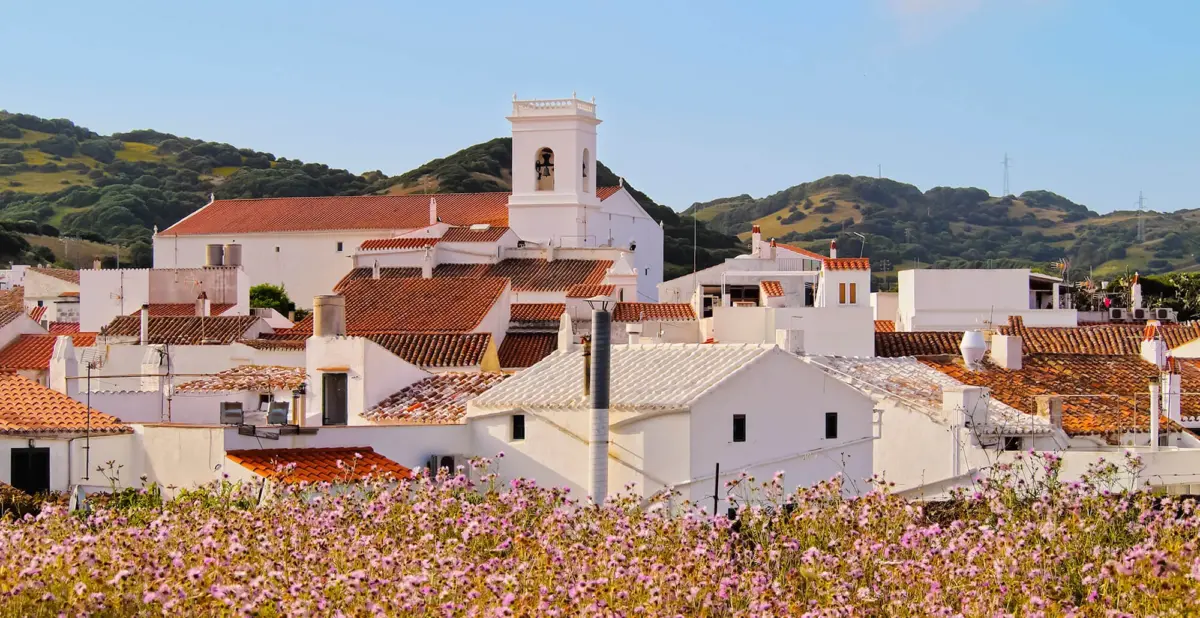
In the heart of Menorca, far from the noise of the coast, the small town of Es Mercadal seems to pause with the heat. Not asleep exactly, but unhurried—quiet in the way only Mediterranean towns know how to be. Here, even lunch feels like something to lean into, not rush through.
It’s exactly the kind of afternoon Food Tours Balearics tends to chase across the islands, unhurried, unbranded, built around whatever the day happens to offer rather than what looks good in a photo, the same spirit behind its Wine & Dine Tour experiences elsewhere in the Balearics.
The name itself gives something away. Mercadal comes from the Latin mercatum, market, and the town was decreed into existence in 1301 as a place of trade between the island’s two main ports.
Centuries later, the market instinct has softened into something closer to a rhythm, unhurried, but never quite still. Sitting at the foot of Monte Toro, the island’s highest point, the town has always been a place people pass through rather than rush past, close enough to the fishing village of Fornells on the north coast to share in its cooking, far enough inland to keep its own pace.
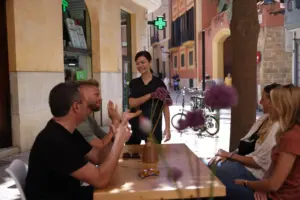
A quiet terrace, tucked between old stone buildings, offered a scattering of sun-bleached tables. No signs shouted for attention. There were no glossy menus or curated music. Just the occasional sound of cutlery and the hum of mid-day warmth settling over the cobbles.
The cheese arrives without a word
No order was taken. No menu presented. Instead, a plate simply appeared—thin slices of Mahón cheese, pale yellow and lightly sweating in the heat. It was served with a modest spoonful of tomato marmalade, slightly sweet and sticky, the kind of thing made at home in small batches and never quite the same twice.
Mahón, unlabelled but unmistakable
Nobody explained the cheese, and nobody needed to. Mahón-Menorca has carried Denomination of Origin status since 1985, one of the older such protections in Spain, and its rind, that faint orange tint, comes from nothing more mysterious than being turned by hand and rubbed with local oil and paprika as it matures. The square shape, unusual for a cheese, comes from being pressed in cloth rather than a round mould, a method locals still call formatjar.
Depending on how long it’s aged, it can be soft enough to spread or firm enough to shave, tender, semi-cured, or cured, each stage tasting like a slightly different cheese entirely. None of that history was on the plate. It didn’t need to be. The cheese spoke for itself.
Beside it, rough chunks of warm bread arrived in a basket. Not sliced, not uniform. Baked nearby, likely that morning, its crust was thick and pleasingly chewy. A bottle of green-tinted olive oil sat waiting, unlabelled but clearly local, grassy, fresh, and faintly peppery when drizzled.
Stew without ceremony
Later, a deep bowl was placed on the table with the same quiet confidence. No explanation. No flourish. Just a clay pot filled with caldereta de langosta—Menorca’s famed lobster stew.
A dish born at sea
Caldereta takes its name from the clay pot it’s cooked in, a caldera, and its history from a far less glamorous source than its price tag today suggests. It was fishermen’s food originally, made at sea from the day’s catch, tomatoes, onion, green pepper and whatever else was on board, no written recipe, no fixed method, just whatever worked.
Fornells, the small fishing village not far from here, is generally credited as the place it first found its way onto a proper table rather than a boat deck, and it’s still considered something close to the dish’s unofficial home today. What was once a meal for the poorest fishing families is now saved for celebrations, the lobster having grown far scarcer, and far more expensive, than it ever was for the people who invented the dish.
The lobster sat nestled in a tomato-rich broth, shells still intact, broth thickened slightly with time and touch. There was no garnish, no attempt at elegance. But the aroma was enough: sea air, garlic, crushed herbs, and the kind of warmth that suggested slow cooking and generational memory. Properly made, caldereta isn’t even served straight off the heat, it’s left to rest for hours first, so the broth can settle into itself before anyone eats it. Whatever arrived at this table had clearly been given that same patience.
The dish was messy, rustic, and undeniably comforting. Bread was torn and dipped into the broth, the act alone enough to make the rest of the terrace feel very far away.
The sound of nothing urgent
Around the terrace, the town carried on at its own rhythm. A group of elderly men debated quietly over playing cards. Somewhere, a shutter creaked in the breeze. A child passed on a bicycle, a basket full of lemons bumping gently with each turn of the wheel.
No one seemed in a rush. Not the diners. Not the waiter, who wandered out only occasionally, more neighbour than server.
Dessert never came—at least not in the usual sense. Instead, a short glass of pomada was placed on the table. Gin and lemon, homemade, soft rather than sharp. Not a cocktail. A pause. Cold, cloudy, and entirely at home in the late afternoon sun.
Simplicity without pretence
There was no branding, no self-conscious effort to be ‘authentic’. The food didn’t shout about its provenance or history. It didn’t need to. The cheese was from nearby hills. The bread from the town’s bakery. The lobster from a boat still rocking gently in the harbour that morning.
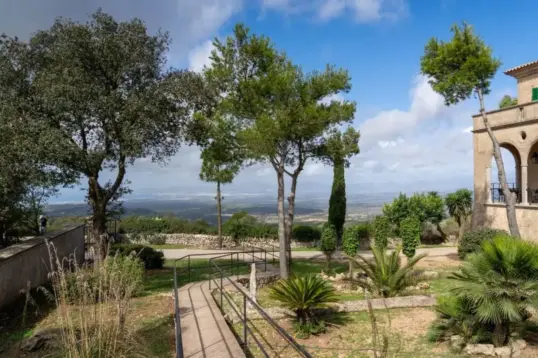
It all belonged to the place. And it tasted like it. Menorca has been a UNESCO Biosphere Reserve since 1993, a status that has as much to do with how the island farms and fishes as with how it looks from above. The stone walled fields that produced the milk for that cheese, the same patchwork visible from the summit of Monte Toro just outside town, aren’t a backdrop here. They’re where lunch actually came from.
A meal that lingers
Eventually, the table was cleared. No receipt was brought. The bill was given by word, and settled in cash with a nod. It was the sort of meal that doesn’t announce itself, yet leaves its mark. Not just through flavour, but in the feeling it leaves behind, something slower, steadier, real.
It’s the kind of afternoon that’s getting harder to find on an island where more restaurants learn to perform for a camera every year. Nothing about this terrace was built for that. It didn’t need an audience, only a few hours, a table in the shade, and whatever the boats and the hills happened to provide that day.
And long after the stew has been forgotten, and the cheese replaced with others, that quiet afternoon in Es Mercadal will remain exactly as it was: simple, slow, and just right.
That same instinct, eating slowly, seasonally, without much ceremony, isn’t unique to Menorca. Food Tours Balearics has traced a similar rhythm across Ibiza and Mallorca in Balearic Flavours: Breakfast, Lunch and Dinner, the idea that how these islands eat says as much about them as any beach ever could. Its self-guided food tours in Ibiza are built around that exact same idea, just at a slightly different pace than an afternoon in Es Mercadal.